Sulfur: A New Tracer in Exoplanet Atmospheres
- Physics and Astronomy Colloquium
May 1, 2026 3:30 PM -
May 1, 2026 4:30 PM
PAIS 1100
- Host:
- Diana Dragomir
- Presenter:
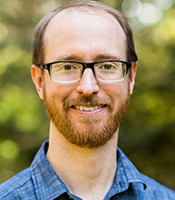
- Ian J. M. Crossfield, Astronomer
SO2 is perhaps the biggest surprise from JWST’s early gas-giant spectra, providing insight into atmospheric metallicity, disequilibrium chemistry, and planet formation. I will share how this unexpected our exciting new results regarding detailed photochemical modeling of a new atmosphere grid, ranging from 0.3-1000x solar metallicity, 250-2000 K, and across a range of internal temperature, XUV irradiation, vertical diffusion, and elemental ratios. Our models reveal the ‘sulfur shoreline’ that determines the key, observable sulfur-bearing species in the atmospheres of giant exoplanets. For example, we find that expected SO2 abundances depend strongly on metallicity, C/O, and overall temperature; depend somewhat on XUV irradiation; depend weakly on Kzz (except for Teq ≲ 600 K); and are essentially independent of internal temperature. We also reveal the dominant sulfur-bearing species across this wide range parameter space. We show that despite its recent detection in a growing number of giant planets, SO2 is never the dominant sulfur-bearing molecule. These results have important implications for interpreting the growing trove of sulfur detections (and non-detections!) from JWST and for preparing for the even larger ARIEL survey.
About Ian Crossfield
Prof. Crossfield leads the KU ExoLab, a research group dedicated to the discovery and characterization of nearby planetary systems.
I am an Associate Professor of Physics and Astronomy working at Kansas University's Department of Physics and Astronomy. My interests lie in exoplanet formation, composition, detection, and characterization, and the development of instrumentation to further those pursuits. I am currently studying extrasolar planets using both photometry and high-resolution spectroscopy from the ground and space. I have worked all over: as an assistant professor in the MIT Kavli Institute and associated Department of Physics, as an adjunct professor and postdoctoral fellow at the UC Santa Cruz Astronomy Department, for two years at UA's Lunar and Planetary Laboratory in Tucson, for two years at the MPIA in Heidelberg, Germany and for three years at the Jet Propulsion Laboratory. I received my doctorate from UCLA. I once maintained an online repository of useful Python computing tools (which urgently needs to be moved to GitHub).