Towards experimentally testing the quantum nature of gravity
 Image
  • Physics and Astronomy Colloquium

October 3, 2025 3:30 PM - October 3, 2025 4:30 PM
PAIS 1100

Host:
Paco Salces
Presenter:
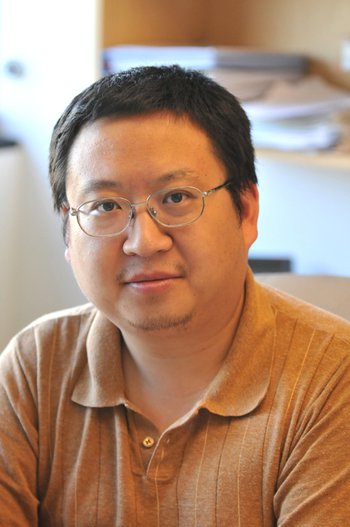
Yanbei Chen (Caltech)
Video Recording
Testing the quantum nature of gravity in the laboratory has become an exciting frontier. A leading proposal is to demonstrate quantum entanglement between massive objects mediated solely by their Newtonian gravitational interaction. At the same time, “classical” models of gravity—where a classical field couples to quantum systems—provide valuable intermediate experimental benchmarks, often more accessible than entanglement tests. Two distinct approaches arise depending on how classical information about quantum matter is obtained. In the Schrödinger–Newton approach, the gravitational potential is determined by information accessible only through the experimentalist’s measurement devices. This produces a nonlinear modification of the Schrödinger equation, analogous to quantum feedback control, where measurement outcomes are continuously fed back onto the system. The resulting self-gravity effect takes place at a much shorter time scale than mutual gravity between two objects, due to the concentration of a solid object's mass near lattice sites.  By contrast, in universal monitoring models, one assumes that the universe itself continuously “measures” all matter. This leads to gravity-induced decoherence, connects naturally to collapse theories (e.g., the Diósi–Penrose model), and links to entropic gravity proposals, where gravity emerges as a thermodynamic effect of many underlying degrees of freedom. Finally, I will emphasize that apparent entanglement can still arise within classical frameworks unless experiments enforce causal separation, underscoring the subtlety of probing the quantum–classical boundary of gravity.

Upcoming Events

Uncertainty quantification for many-body physics: from light nuclei to neutron stars
Ryan Curry (LANL)
Nuclear, Particle, Astroparticle and Cosmology (NUPAC) Seminars
Sep. 29, 2:00 PM
PAIS 3205

Pulsar Cyclic Spectroscopy as a Probe of the Interstellar Medium
Jacob E. Turner (Greenbank/Cornell)
CART Astrophysics Seminar Series
Oct. 1, 2:00 PM - Oct. 1, 3:00 PM
PAIS 3205

Measurement of the CP-Violation Parameters Γ_s, ΔΓ_s and φ_s as a Probe of New Physics via the B_s^0 → J/ψ φ Channel using the ATLAS Detector, and Development of Technologies for a New Measurement at the Future Circular Collider
Saheed Oyeniran (UNM)
Nuclear, Particle, Astroparticle and Cosmology (NUPAC) Seminars
Oct. 6, 2:00 PM
PAIS 3205

SQuInT 2026 Annual Workshop
Various
No Affiliation
Oct. 15, 7:30 AM - Oct. 17, 6:30 PM
Omni Tempe Hotel at ASU, Tempe, Arizona

Title: TBA
Kyle Massingill (NRAO)
CART Astrophysics Seminar Series
Oct. 15, 2:00 PM - Oct. 15, 3:00 PM
PAIS 3205